Accessory Structure Permit & Minor Variance – Mississauga, ON
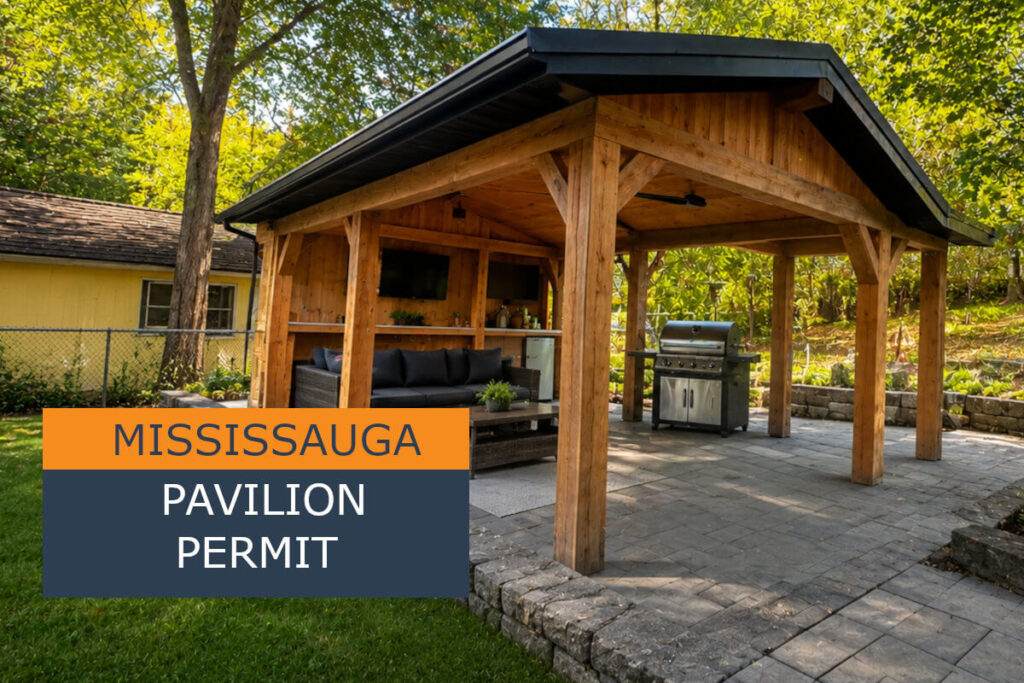
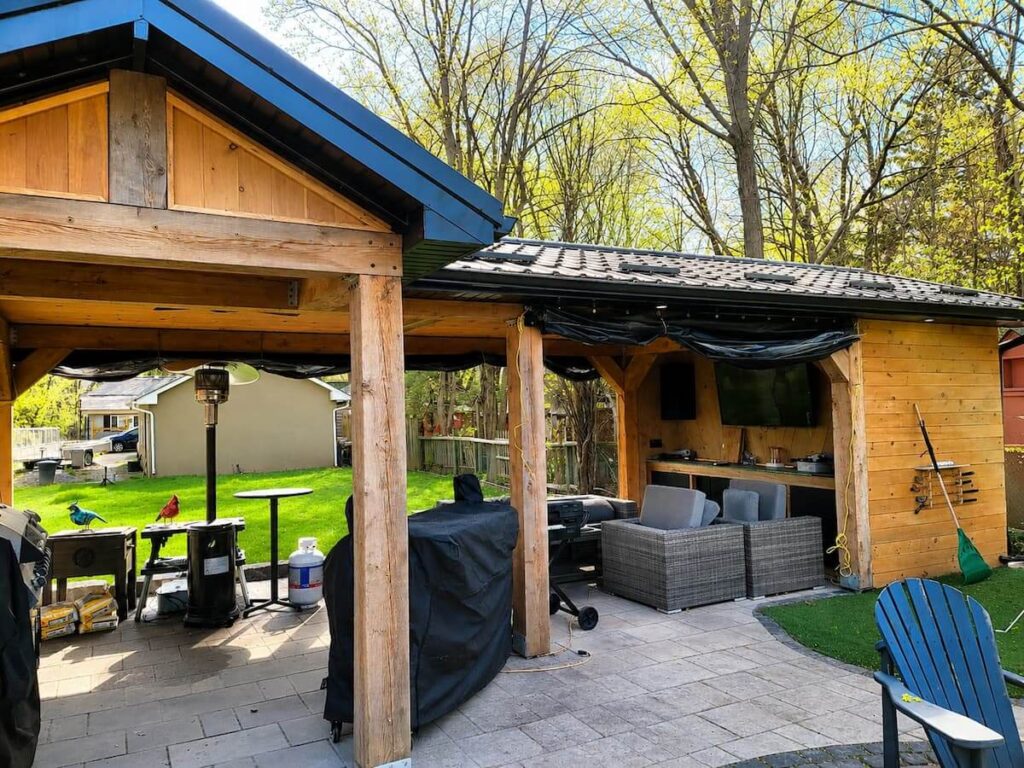
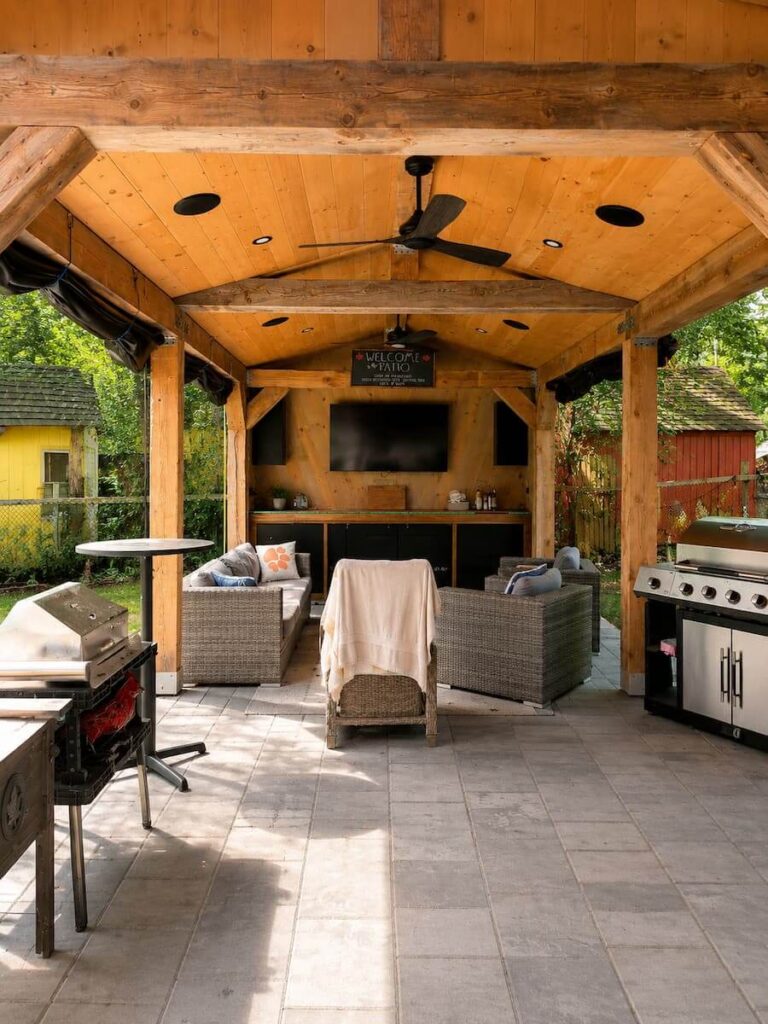
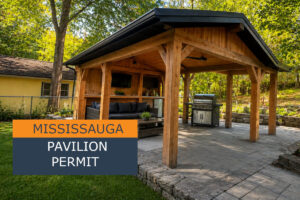
This accessory structure project in Mississauga involved the permit legalization and minor variance application for a custom-built backyard pavilion constructed with exposed Douglas-fir timber framing.
Designed as a covered outdoor living and entertainment area, the structure included seating, lighting, and outdoor cooking spaces that significantly enhanced the property’s backyard experience.
Permit Man was retained after construction to prepare permit drawings in compliance with Ontario building code, review zoning compliance, and coordinate the approval process with the City of Mississauga for the existing accessory structure.
Accessory structures such as pavilions, gazebos, pergolas, cabanas, and covered outdoor spaces are commonly subject to zoning and building permit requirements in Ontario.
Our scope for this project included permit documentation and support for the ongoing Committee of Adjustment application related to the required minor variance.
The completed timber pavilion created a visually striking and functional outdoor space while establishing a pathway toward municipal approval and compliance.
Planning a Restaurant or Commercial Renovation Project?
Our team assists restaurant, café, retail, office, and commercial tenants across Toronto and the GTA. Contact us today to discuss your commercial permit application.
Do I need a permit for a backyard pavilion or accessory structure?
Many backyard accessory structures, including pavilions, gazebos, pergolas, cabanas, and covered outdoor living spaces, may require a building permit depending on factors such as size, location, height, and intended use.
Zoning requirements and Ontario Building Code regulations should be reviewed before construction begins.
Can an existing accessory structure be legalized after it has already been built?
Yes. Existing structures that were built without permits can often be legalized through a permit application process.
This typically involves preparing permit drawings, reviewing zoning compliance, and addressing any Ontario Building Code requirements before obtaining municipal approval.
When is a minor variance required for an accessory structure?
A minor variance may be required when an accessory structure does not meet local zoning requirements such as setbacks, lot coverage, height restrictions, or permitted location on the property.
Property owners may need approval through the Committee of Adjustment before moving forward with permit approval.
What is considered an accessory structure in Ontario?
Accessory structures are secondary structures located on a property that support the main residential use.
Common examples include pavilions, gazebos, pergolas, cabanas, detached garages, sheds, and covered outdoor living spaces. Depending on the structure type and size, zoning review and building permits may be required.
Does a covered outdoor living space with seating and cooking areas require zoning review?
Yes. Covered outdoor spaces that include features such as seating areas, lighting, outdoor kitchens, or cooking spaces may be subject to zoning regulations and building permit requirements.
Municipalities review factors such as location, setbacks, lot coverage, and overall compliance before approval is granted.
Planning a Restaurant or Commercial Renovation Project?
Our team assists restaurant, café, retail, office, and commercial tenants across Toronto and the GTA. Contact us today to discuss your commercial permit application.